

Reflections from Tällberg, Sweden. May 2026
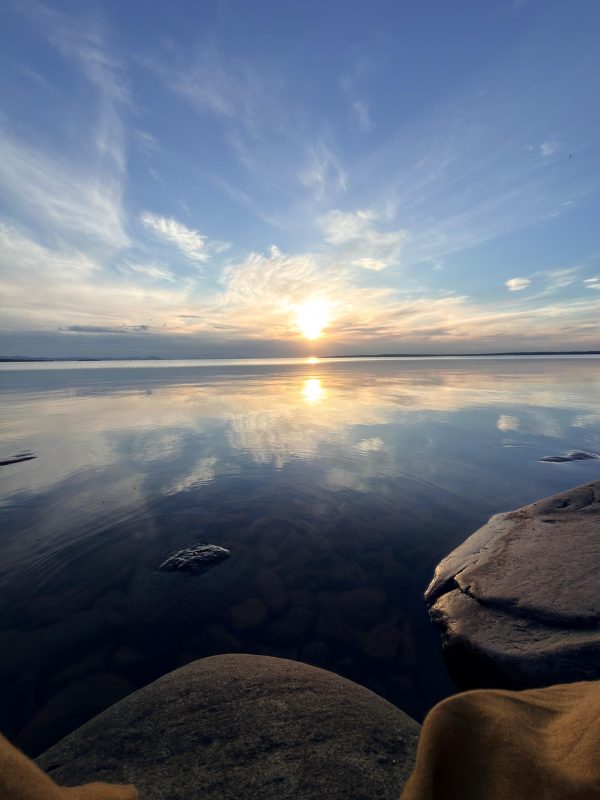
The Swedish countryside does not try to impress you. It just is. Lake Siljan sits still in the late May light. The pine forests hold their silence. The air moves slowly. After spending too long in rooms where everything feels urgent and nothing gets resolved, this kind of stillness feels almost confrontational.
I was in Tällberg, Sweden at the end of May 2026. I attended the Tällberg Gathering, hosted by the Aurora Borealis Foundation. The theme was Steps Toward a Universal Ecological Civilisation. I returned home to Malaysia in early June.
The people in that room were not dreamers on the margins. They were former Deputy Secretaries-General of the United Nations. Chief economists of international development banks. Founders of ecological movements active in over fifty countries. Researchers from Stockholm, Beijing, Delhi, and Kuala Lumpur. People who have spent decades watching the data and the world drift apart from each other.
The conversations were calm. They were also, at times, quietly devastating.
I left unsettled. Not because the ideas were new to me. They were not. I have carried these instincts for a long time. A belief in the wholeness of human development. A quiet conviction that something in our civilisational direction has gone wrong. What unsettled me was hearing people name, with such clarity, what I had only felt. And then the long flight home, back to a political climate where these questions still sound impractical. Where raising them makes you sound naive.
I want to write honestly about what I brought back, as a person who sat in those rooms and could not pretend, afterward, that nothing had shifted.
There is a question moving through the world right now. Economists ask it. Ecologists ask it. Ordinary people feel it, even if they cannot name it. It goes something like this.
We have never had more. Why does it feel like so little?
Global GDP keeps climbing. Our technology keeps expanding. By the measures our governments prefer, we are more prosperous than ever.
And yet. A whole generation cannot afford a home in the city where they were born. Young people’s mental health struggles get treated as personal failures, not as a signal that something larger is broken. People work longer hours for less and less meaning. Trust in institutions is falling everywhere, and Malaysia is no exception. Our young people are not apathetic because they don’t care. They have quietly concluded that the system was never built with them in mind.
Tällberg asked, carefully and without sentiment, whether the way we measure progress is part of the problem.
In May 2026, the UN Secretary-General’s own High-Level Expert Group on Beyond GDP released a report. It proposed a new way to measure national progress, one that goes beyond GDP. The report was direct. An economy can keep growing even as safety, environmental quality, and social trust fall apart. The need for a broader measure of progress, it said, has never been more urgent.
This is not a fringe idea anymore. It has reached the centre of global governance. Yet most of our political conversations, including in Malaysia, still revolve almost entirely around growth rates and income figures. We celebrate these numbers and quietly wonder why the people behind them do not feel celebrated.
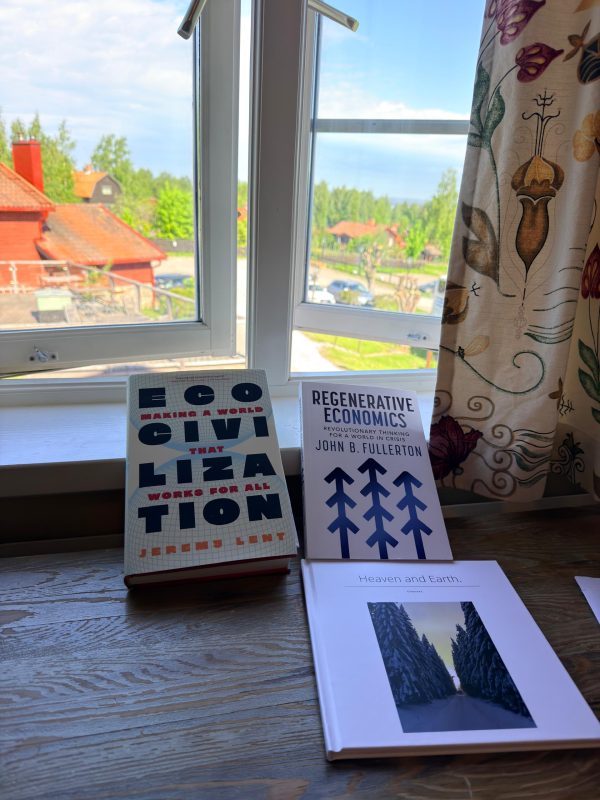
Jeremy Lent published a new book this year, Ecocivilization. Many in the ecological civilisation movement consider him one of the most important thinkers of our time. His argument is simple and hard to sit with. Our current civilisation was not built by accident to favour exploitation, accumulation, and the concentration of power. It was built this way, slowly, over centuries, through assumptions we inherited and never questioned. The problem is not a policy failure. It is a deeper design failure.
That is not an easy thing to accept.
But in that quiet Swedish countryside, surrounded by people who have spent their careers studying this question, it felt true.
I am a Malaysian lawyer. I am a politician, a member of MCA, a party that has built and helped govern this country since independence. I also teach in a Steiner-Waldorf classroom. I coach NLP and practise Human Design. I am a mother of three. I carry more than one world inside me, and I have spent much of my adult life trying to make these worlds speak to each other instead of keeping them apart.
Tällberg did not let me keep them apart.
The ecological question is not separate from the education question. The education question is not separate from the governance question. The governance question is not separate from a simpler question: what do we believe a human being is for? These are not different issues sitting in different ministries. They are the same question, asked from different angles.
That same question is being asked everywhere right now. In the halls of the United Nations. In a quiet meeting room beside a Swedish lake. And in the daily lives of young Malaysians who work hard and still cannot find solid ground.
We have spent decades measuring what we produce. We have not seriously measured how we are actually doing. Whether we are well. Whether we are whole. Whether this country is oriented toward the real flourishing of its people, or only toward numbers that look good in a report.
We are now at the end of June 2026. We stand on the cusp of something. State elections in Johor, then Negeri Sembilan and Malacca, are just ahead of us. The sixteenth general election waits beyond that. This is the final leg before 2027.
In a season like this, every conversation tends to shrink down to tactics, numbers, and who is winning which seat. I understand why. But I do not think tactics are what our country needs most right now.
I do not have a full answer to bring home. What I have is a question, and I think it is worth asking plainly, without the usual armour of political language.
What are we actually trying to build?
When a child finishes school in Malaysia, when a young couple tries to put down roots, when an elderly parent grows old in their community, what kind of life have we actually prepared for them? What have we protected? What have we let erode in the name of growth?
Five days of stillness in the Swedish countryside gave me space to ask that question properly. I am not sure silence has ever unsettled me quite this much.
But for the first time in a long while, I am certain the question itself is the right place to begin.
More to follow.
